Print Friendly and PDF
Showing posts sorted by relevance for query smith. Sort by date Show all posts

Friday, 24 January 2020

154 9th Street - Smith House

Image from Google Street View 2014

The Smith house (former Scotty Mennie house) by Fletch Manning in 2004
Mr. A. E. Smith (Ab)* came with his family to the Elm Valley district in 1888 to farm. As a young man, he butchered and provided met to neighbours and friends.  In 1899 he opened a small shop in the small settlement of Reston. Later on, he built a fine two-storey store butcher shop.
In 1905, Mr. Smith bought some land on the east side of Reston, the south half of 9. He lived above the meat shop before his marriage and in 1927 had a fine new home built for he and his wife, Ellie. Mr. Bushby was the carpenter. It was built on the land he had previously purchased and where it still stands today.
Mr. Smith was noted for his original advertising in the Reston Recorder. He had a special spot in the paper for his ad, and each week had a “catchy comment”. During World War II, the Recorder was passed around overseas to the service men and many comments of “Let’s see what Mr. Smith has to say this week” were expressed.
In 1951, after 51 years in the butcher shop business, Mr. Smith sold his home to Alexander (Scotty) Mennie. The D.V.A. (Department of Veterans Affairs ) assisted returned veterans with property. Scotty and Shirley and their two sons lived there until 1972. They sold the home to Ms. Carrie McAdoo who in 1995 sold it to Mr. Conrad Karpinski. Connie sold the house to Mr. Cory Martin, the present owner.


*More on A. E. Smith can be found online at this Heritage Manitoba link on page 40
 http://heritagemanitoba.ca/images/pdfs/featuredProjects/We_Made_Pipestone_Heritage_MB_complete.pdf

Sunday, 9 January 2022

The Butchers in Reston History

Reston’s early citizens had a taste for protein and several local entrepreneurs stepped up to run Meat Shops. Farmers may have had access to home grown meat but customers like the Boultons paid for the services of a butcher for cutting and grinding their beef.  Beef Rings had a place in rural areas in the days before home freezers. Community service seemed to go hand in hand with running a meat shop in Reston.  This post will tell some of their stories.


Albert Edwin (known as A.E.) Smith was a meat merchant in Reston for an amazing 51 years. He opened a shop on Main Street in 1899 when he was 25 years old. He had organized rings and delivered beef from his farm in the Elm Valley district before deciding to open a shop.  His portrait hangs in the RM of Pipestone office as he was Reeve in 1918 and contributed to community life as on council for many years. He took special interest in the Reston Cemetery and is credited with planting the spruce trees around it. His shop on 4th Street burned in 1915 and unfortunately, the early burial records as well. He rebuilt in 1916 and included another space on the north side that became the Canada Cafe. Mr. Smith's name was prominent in early discussions of having a cenotaph and a park surrounding it to honour the WW1 fallen.  Apartments upstairs in the Reston Meat Market housed many people over the years. A. E. also sold insurance and he built the little concrete block building that was just north of his shop for this purpose.  He and his wife Ellie's house on 9th Street was featured in an article here written by Fletch Manning in 2004. A.E. Smith died in 1950 and his wife in 1972.  They had two daughters and two sons including Edwin Earl who died overseas while a member of the Royal Air Forcein WW2.


During the boom days starting in 1905, the Imperial Meat Market operated on the spot of the present playground under John Benjamin Ireland (1864-1925). He and his wife had 2 sons and 2 daughters and decided to leave Reston in about 1915 for greener pastures in the Peace District of Alberta. Norwegian Oscar Haugse can be found in Reston on the 1916 census working as a butcher and living with his wife Annie and two children Thelma and Melvin were born during his time here.  

Other names in butchering were James Sexton, J. Bray and Jack Matthews.  Some of these men ran the Reston Meat Market for A.E. Smith but others may have set up shops elsewhere. In the early 1940’s, Reston House proprietor R.V. Cusack had a meat shop on the east side of the hotel with a door to the south to sell meat.


Pete Lamond (1891-1977) came from Oak Lake in the early 60's where he learned the butcher trade with his father Jack. He had been born in Perthshire, Scotland in 1891, and followed his father in the butcher trade after serving in WW1.  He worked at Reston Meat Market for a time until he decided to strike out on his own in the part of the shop that would eventually become the bakery.  His wife Bernice (Schmidt) had opened a bake shop and confectionary in the same building. This picture from the McKee Archives in Brandon University dates to 1964. They left Reston in about 1968.  Pete died in Vancouver in 1977.

Leo Curtis was a Reston businessman and entrepreneur who purchased the Reston Meat Market from Smith and renovated to create a new storefront.  He also installed 400 freezer lockers where customers could store meat before home freezers were widely available.  The bill below for locker #272 shows he charged $3 for just over 2 months rental. Leo was also busy at the Massey Harris and Dodge Desoto businesses so the shop was operated by Don Graham, Al Owen, Bill Baird and Gene Traill and perhaps others before being sold to Henry Claussen (1932-2003) in 1961.


C. Henry Claussen came from Germany in 1956 to start life in Canada. He met his wife here, the former Helen Adamson who was a nurse.  The couple made Reston their home for the next 2 decades. They had 2 boys and a girl while here. He was active on the Theatre Board, Minor Hockey and Ball, Fort La Bosse School Division and Chamber of Commerce and Reston town affairs. Henry was the first president of the newly created Reston Lions Club in 1963. They lived on the southeast corner of 6th Street and 2nd Avenue.  They contributed greatly to community life until selling the shop in 1980. 


Myles Van Damme bought the shop and named it Reston Frozen Foods in 1980. Myles did custom meat cutting as well as retail sales of meat including a deli counter. He and his wife Bernice were also strong community supporters. They raised 3 sons in Reston in the former Mennie home. 

Dean Andon was the last owner in 1993. The two storey building with the front already removed in the colour picture below was Reston Frozen Foods with the bakery just north/left of it. The old original 1916 building was torn down in 1996. The photos and clipping below are from the collection of John and Verna Olenick.


Long silver trays of sausage and other products, sawdust on the floors and that indescribable unmistakable smell of the butcher shop are memories of the meat market of my childhood.  I'd be delighted to hear yours in the comments below. 

Sunday, 12 December 2021

Mr. Archer's Park History Notes 1965


Picture from a 1959 Birthday Calendar sponsored by Reston Chamber of Commerce

Today's post features the writing of Mr. Alfred Archer as a follow up to a previous post with minute books and scraps of paper loaned by the Reston and District Museum. This post was transcribed from Mr. Archer's handwritten notes which the Park Board Committee requested in the mid 1960's as he was stepping back from his role as Park Supervisor.  His final sentence is my favourite!  Even in his wildest imagination, I'm sure he would have never thought his notes would be available to the world online.

After the First Great War it was decided to get a memorial. It was discussed which to have a monument or a memorial hall. Mr. A.E. Smith asked me what I thought but I thought a monument as it were purely memorial. No source of pleasure or revenue.

At a public meeting of the community in 1921 it was decided to have a memorial monument. A monument was decided on being more suitable than a hall. A committee of J.R. Duncan, William Watt, N.H. Ready, J.R. McLean, W.A. Brady, Dr. Clark, and E.H. Berry secretary. They were to collect donations from the district around Reston purchase a suitable monument and erect it.

The town of Reston was to provide the site with the site committee of Dr. Chapman president, A.E. Smith secretary, W.A. Brady and John Guthrie. There were no donations the village provided the park for the site of the memorial statue by taxes. Later Mr. Smith asked me about the best site. Suggestions from the four corners on Main Street to different small town lots. I suggested a small park and a number of places were considered. I thought the best place was in the present grounds as we had no water and the ground was the most suitable for growing shrubs etc. and fairly central. I suggested vacant ground on the east side of town this was decided on and property bought from the C.P.R.

The property was bought from C.P.R. was two blocks on east side of Reston. Prairie in the natural state except a knoll in the south east corner which was scraped off by the C.P.R. to fill a slough at the station ground. There were a number of shallow sloughs, no trees except a few small native poplars at one slough and small native shrub usual to the prairies. The ground a shallow black loam with clay subsoil except a small piece of shallow gravel subsoil on the east side. No water.

In the year 1921, J. McMurchy, a willing volunteer worker and have good taste, was asked to fix up or supervise the work on grounds. The scrub was cut off, the west half was leveled - that is the high places were scraped in the sloughs and leveled black earth not saved but put in sloughs and high places. Left with a clay topsoil which was bad at planting time. Later the ground was fenced with page wire and one strand of barbwire on top with wire gates. A small neat well built building was built with public toilet with basement pit on east end and small tool house on west end with lattice screen on east and south covered with vines. The prairie grass could not possibly do as lawns. In 1921, ground was broke and backset by a farmer J. I. Bulloch. In 1922 Mr. Bulloch sowed a cover crop of oats, brome and rye. Grass was sowed and both done well. This was done before I was on the committee. The Park committee was: Dr. Chapman, W.A. Brady, John Guthrie and A.E. Smith (all have passed away except Dr. Chapman who took an active role until his death in 1961.)
Alfred Archer 

I (Archer) was not on the committee but was asked to attend the meeting of the committee to help on the planting in 1923. They had a plan from the Manitoba Agricultural College drawn by a person that was not acquainted with the park site or the nature of the soil. It did not consider the walks in park or the planting stock suitable. I made a rough plan on the back of the blueprint which was accepted and followed with some additions until present time a little done each year. I was added to the committee at this meeting in 1923. Surplus money collected for the memorial $236 turned over to the park at a later date.

Special trees when we first planted the shrubs in 1926. We tried 4 Koster Bluespruce. $2.50 each. Followed planting instructions, very close. All four grew good and beautiful trees today. They were inclined to grow crooked when young. We braced them and put on pieces of wood to keep them straight. In a few years they were straight and braces were removed. These all done fine large trees today. Six Scotch Pine - rabbits ate them in winter - destroyed. Six Spruce these died for want of proper care.

In the late winter or early spring of 1928, the weather was warm and very little snow and the trees budded out. Then the cold weather came and killed a number of golden willows and double lilac. I noticed the bark on the willow trees turned black. Mr. Broderick was in town often attending a meeting I had him go to the park with me he examined the trees he said they had started in growth in the cold zero weather later killed them. We lost the Golden and Laurel Willows also Elm trees. It also killed some of the tops of the white double lilac.

In the 30s we try different evergreens at different times. Bought a few spruce from a man that had 10 left from a truckload. Did not have much prepared ground. He advised placing them close as they grew that way in nature. We done this and they done well when small but when they got large in dry seasons some died for want of moisture they did not winter good. A little later we got more from a truckload these did not do as well we had to make holes after we got the trees think the trees were out of ground too long. They had sod, original soil around trunk but soil was off the roots below. Think they had been dug in light soil which shook out while being handled. The trees that lived are good today, but too close together.

In 1939, we took a lot of iris and some other perennials to the gardener Mr. Leans at Clear Lake. He asked me what he could give us in exchange. I said we had nearly all the perennials he had but would like some Spruce. He said he could not give us them but would see the right authorities. The next time I saw him he said he had seen the right authorities and he could fill our truck - a panel delivery - from trees that were to be removed to make a road. We got around 50 trees including 8 Siberian Larch he had in his nursery. The Spruce have done well. The Larch have done extra well all living and admired by all visitors.

I think it was in the early 40’s there came a heavy frost in the fall before the leaves had fallen and the wood reopened on the Spirea - Vanhouttei and Arguta. The next spring had the wood all dead to the ground. New growth all came up and the following year had the best bloom we ever had. I think the old growth should be all cut out every year immediately after blooming, but we have not done it. Mock orange suffered badly but came from roots. Mock oranges don’t do well here - the tops kill every winter. I got one from A. P. Stephenson for my own property which did not do well. After the park started, I took it there. There are two or three growing and bloom but suffer badly every winter. In 1946 I got some double ones from Morden Experimental Farm. They make good growth every summer but winter kill just have a few flowers at the bottom of the bush. We have had no damage from floods. No bad hail damage. We had a heavy wind storm about 1947 blew over a number of poplars and one Koster blue spruce. We dug out the ground on the uprooted side, pulled it back with tractor, covered roots good and watered and placed a guy wire to hold it and today you would never know it was blown over. I don’t remember ever being discouraged.

Mr. Archer's hand drawn map - unknown year 

The park committee at this time did not have any money to buy trees and shrubs so we obtained them from other people who had a surplus. I raised shrubs and perennials in my own back garden, brought some from the Assiniboine Valley, and exchanged plants and shrubs from people in other places. We lost some trees on the start as we had no water. I made no charge for my time for a number of years. Afterward I was given a donation not for the work I had done, but in appreciation for what I had done. The ratepayers moved that I be given $200. Later this was increased to $400 which I have received every year since and have been given praise every year. For labour, expenses and my donation, a grant was made every year by the municipality from the Local Improvement District. This was $350 at first and raised as required. The last number was $1200.00. We tried to keep this for labour. I’ve also raised bedding plants, cut flowers, sold perennial plants and shrubs which brought in money. Herbaceous perennials and peonies were purchased later. A few others that could not be raised were bought. Most of the perennials were donated and then multiplied. I also donated tools and materials I did not need. This last year we stopped raising bedding plants, when I could not go to the greenhouse, the distance of 1/2 mile twice a day, and to have a man do it would not pay.

In the 30s bought from Skinners six Juniper from the Badlands of Dakota. We lost three for lack of attention but the other three are nice. In the 30s I bought some pink cherries from the Assiniboine Valley these grew well lots of bloom but never any berries.

Double flowering plum we got in 1925 is a beautiful bush. Got more in the 30s but planted them where there were too many other shrubs.

About this time Skinner’s nursery of seedlings had a special dollar collection of seedlings: 1 Juniper, 1 Morgan’s Pine, 1 Colorado Spruce and 1 Cedar. I got 4 collections planted them in nursery. Planted where we wanted later. All done well. We tried a couple of cedars earlier but they sunburn in winter and finally died. The ones we got later planted on the north and east side of shelter and have been doing good.

In 1942 Dr. Chapman donated six selected blue Colorado spruce, six green Colorado spruce, and six Scotch pine - all these trees are doing good.

Dr. Chapman also brought in from the wild in his car trunk, 10 Jack Pine which we planted among the shrubbery as the trunks don’t to well so hide the lower part and Black Spruce which done well. But some died four years ago. Think they did not have enough moisture in the fall.

1942 Mr. McMorran (Souris) donated some Balsam and Native Tamarack and Mountain Maple. The Balsams still growing but not Tamarack died from drought a few years ago. They were planted in wrong places and not given any attention. The Mountain Maple lived a few years but did not do well finally died. This was also in wrong place and paid no attention. Mr. McMorran gave us another Mountain Maple fall of 1956 and balsam. I gave this Maple good attention in planting and situation.

In 1953 Dr. Chapman donated a pyramid Cedar. We planted this on north east corner of grove and this is doing good. At the time of planting I noticed a root that looked like new shoots were starting. I gave this special attention and last spring I moved out from this three small cedar. They were looking good at freeze up last fall. Kept them well watered in a shady place.

1955 bought two Globe Cedar and one Juniper. These appear to be doing good - had no setbacks.

Buffalo berry also brought some from nice bunch south of Miniota. These grew well but never any berries. I found some more from south of Bradwardine. They are bearing berries now. I also got some from Morden in 1952. Had berries in them this last year. I did not know there were the two sexes. So now if I am digging wild plants get them different places if possible to ensure a better chance of getting both sexes and good fruit varieties.

Paper birch - took some young shoots from an old stump in the Assiniboine valley in the 30’s. Very little root but they grew good. The borer killed some later but they came from bottom. Lilacs we have Skinner’s different varieties - Vellum, Hybrids, Persian, Amur and Japanese. These all do well excepting the white Persian which just done well one year. Possibly it is not pruned enough.

Native Saskatoon - have a nice clump planted in the early 30s. Look very good. Foliage nice green in summer and colours good in the fall.

High bush cranberry planted about 1925 still living but too crowded. Planted more in 1955.

Russian Olive very desirable planted in 1927 done well had them 30 feet tall. Lost one which came from an old stump in 1952 - expect it was the early frost.

Weeping cut leaf birch planted in 1925 done well but it is done now think it has run its life.

The gardeners which have looked after the park - Mr. Tom Caldwell 1928, Alf Anderson 1930, Maurice Ludlum 1942. Up until this time the work was done by hand and a one horse cultivator. A small tractor and cultivator was bought in 1942. Mr. Paul McCartney was next in 1956. There were a number of persons after that and the dates not recorded, Tom Nash, Tom Lockhart, Earnie Johnston, Jim McGregor, Raymond Kendrick, Louis Chaskie, Earnest Scott, Mrs. Tom Lockhart, and John Pickett. There were others who did casual labor. Flowers were sold by Lyall McMorran, R.C. Bulloch and Mrs. Archer.

The knowledge of the park will soon be forgotten if some younger person does not care to learn about it.

Friday, 15 April 2022

Hang on for Pushmobiles!

The three pictures from the Pushmobile Races come courtesy of Verna and John Olenick. I might guess this one is from the 1940's looking at the skirt length of the spectators. 
Notice the cheering fans on the roof of the Guthrie-Bulloch Insurance building to the north of the bank!
  My hope today in writing about the exploits of Restonites from almost a century ago is that some family member googling their ancestor stumbles across this story online. I have found a few of my own connections that way and it makes you realize what a small world and big internet we have.

Pushmobile races were once an eagerly anticipated event in Reston in the early days. Youngsters built homemade soap box push cars and raced them on Fourth Street. If you’ve seen Reston Main Street, you know it’s as flat as tabletop so a strong pusher was key and gravity was not much help. Basics of each go cart were a seat, a steering system, and a pushing handle. After that other embellishments were up to the creators. Vehicles were often given names too.

The Trails Along the Pipestone 1981 history book on page 516 gives lots of details from a May 1929 story in the Winnipeg Free Press. Picture yourself on the south end of Main Street either as one of the group of thirteen excited pairs of competitors or one of the  450 spectators waiting for the starting signal.  Starters for the dusty race were Dave Anderson, the railway’s station master, and Jock Scougall (or maybe it was Jack Scholes) the mail clerk on the Peanut. Judges intently watching the finish line at the far end were Presbyterian church Reverend Robert Harvey, Jack McMurchy, Thomas Albert (T. A.) Bulloch and school teacher Harold Stinson.  I wonder if the race ended at Second Avenue or if it went up to the RM office corner on Third. One block would have been plenty long enough on the gravel street. 

Among the winners that day in 1929 were Reg Guthrie (1915-2002).  Reg was a nephew of T.A. and Ellen Bulloch who raised him after the death of his parents Jack and Maude.  They lived in the cement block house at 221 1st street.  A neighbour two houses over was his pusher,  Bert Mutter (1918 - 1991).  Bert was a son of Thomas and Margaret and lived in the red brick house at 114 2nd Avenue. Thomas Mutter was the agent at the Lake of the Woods elevator for over 2 decades and after a time in WW2, Bert did the same until it was destroyed by fire in 1950. Two more pushmobile winners that day were Ken (1920 - 1985) and Lew (1922 - 1997) Watt, sons of Hillview farmers William and Annabelle Watt.

The picture above looks like the Dads' Heat and #17 was able to race to the lead with the driver casually smoking his cigarette! Looks like he needed both hands to steer the car.  I am guessing this picture was taken in the late 1940's or early 50's but my readers may have better guesses.   


The big winner of the day in 1929 was a car named “I’m Alone” driven by 13 year old Bruce Hunter and pushed by Teddy Smith. Bruce was the son of Dr.Hugh and Nellie Hunter and went on to be a doctor himself in Brandon in the 60’s and 70’s. I found the photo of Bruce from a University of Manitoba yearbook from online ancestry tree of user lmmcrafts.


Pusher Edwin Earle Smith , known as Teddy, was son of Albert and Eliza Smith. A.E. Smith was an involved Reston citizen who ran the Meat Market and Eliza was a well liked and respected community nurse. Teddy went on to University of Manitoba (presumably with his buddy Bruce Hunter) and later trained with the Royal Air Force. He sustained serious injuries in an airplane crash in 1941 and spent over a year in hospital with a broken back. E.E. re-enlisted and was tragically killed over Burma, India in August of 1943 at age 28.  A sad ending to my research of the boys from 1929, I'm sorry to say.


Races continued through the years and it seems this one started at the corner of Fourth Sreet and Second Avenue and headed south.  The Red Rocket with the white round headlights and the number 711 had been identified as belonging to Sandy and Raymond White, sons of Max and Ida (Bigney) White in about 1950. The man pushing the baby stroller on the far end, I hope was a starter or else that baby had better hang on! Thanks to my readers who hung on this story to the end.  I'd love to hear from you at ssimms@escape.ca

Wednesday, 29 March 2023

Millinery at GS Munro’s in 1910


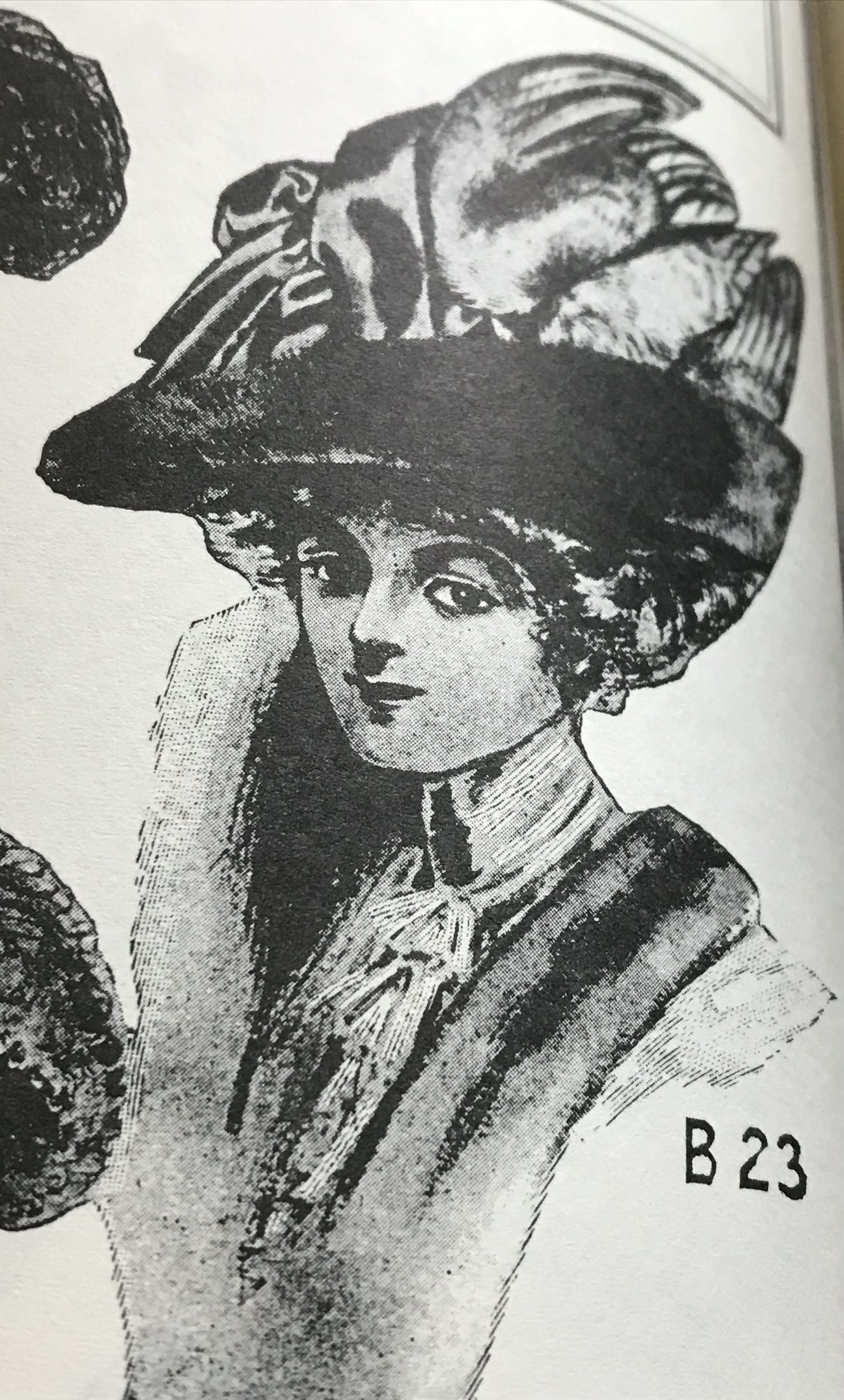
Today's post gives a glimpse inside the G.S. Munroe store in Reston, Manitoba in October of 1910. The impressive two story stone clad store would have been 8 years old and sold a variety of merchandise to the growing town. On this particular day, a display of the new hats for the fall season was being held. Pictures and descriptions of ladies' hats found in the Hudson’s Bay Catalogue 1910-1911 at the top of the page give us an idea how fancy the headgear was in those days.


October 6, 1910 Reston Recorder Page 8

 The opening days at Munro‘s on the 3rd, 4th and 5th, both from a standpoint of attendance and the sale of ladies’ headwear, were most successful. Miss Whitely, the popular milliner, and her assistant Miss Grace Shippam, had on display, a choice collection of ladies hats that brought them much deserved praise. The large sale that resulted was most gratifying.

A description of the new styles, in a short space is impossible, but the following points may prove of interest to our lady readers who have been unable to attend the display.

In the larger hats, for young or middle-age ladies is the “La Cloche” made in paon silk velvet, trimmed with black taffeta silk ribbon.

A stunning creation in a small hat is made with a sloping stovepipe shape and made in paon silk velvet. The crown is draped and a large wing poses on the left side.

A beautiful feather band turban the crown draped with shirred satin ribbon, with a large bunch of ribbon caught up on the left side was one of the creations that had a host of admirers.

Another popular hat is one trimmed with marabout and roses. The rim is of silk velvet and is faced with moire silk ribbon.

The most popular colours are royal blue, brown, black and white and catawba.

Many of the ladies, after inspecting the millinery display and choosing their season’s apparel, attended the demonstration given by the Gold Standard demonstrator, and received many useful hints regarding the use of Gold Standard Products.

Reading these old articles has me doing some researching to help me put a picture to their words! "Paon silk velvet" seems to be a term that has faded into history but ladies of the time knew it must have been special silk.  "Moire silk ribbon" has a watered or woodgrain type pattern on it.  "Marabout" trim may have been misspelled from marabou which is soft downy feathers of a young turkey, dyed different colours as decoration. "Catawba" coloured hats? What would I do without Google??  It is described as a medium shade of dark pink-red.  Huge hats like this were kept in place with hatpins, which have become collector's items. 

Trails Along the Pipestone 1981  has a photo on page 491 of the millinery department of G. S. Munro Store in 1920 featuring Miss Cutting and Miss Mabel Abercrombie set up on the second floor.  Other Reston milliners over the years include Miss Levers, Gilles, and Mrs. T.W. Boulton (her husband was a distant relation, I think!). 

Lottie Smith, daughter of Thomas and Maggie Smith of Sinclair, was another who learned the millinery skills. Her niece Pat Taylor tells me that she worked in Salisbury's Millinery Shop in Reston in the 1920’s. Miss Smith made and sold millinery, ladies clothing and operated an ice cream parlour in the little old butcher shop until 1927 when she moved to Winnipeg. She remained a spinster her whole life as did her sister Minnie.

The wife of Dr. Clark, Winnifred, sold hats above the drugstore and later the bank in the 1930's. Fashion hats were worn less and less during the Second World War and by the 1970's were almost never seen.  The Catholic Church no longer required head coverings in services in 1967. One interesting website says this was due to shorter hairstyles but often hats were also worn to keep the sun off a woman's face.  The British royals and the Kentucky Derby have kept hats and fascinators in the news recently but they are a niche market.  

Were your curious what Gold Standard Products were? Google searches didn't find much but this ad from Munro's store the week before the millinery event makes it sound like the beginnings of a Watkins type company with many products to flavour and simplify home cooking. How many in the crowd that day in 1910 came for the hats and how many for the baking demonstration? 

Wednesday, 24 November 2021

Preserving the Past for the Future

According to the minutes book, it was the spring of 1966 when Joe Ashley and his brother Charles approached the Reston Memorial Park Board with the idea to create the Reston and District Museum on their grounds. At that exact time, President Maurice Ludlam and the 9 board members were busy preparing for the imminent departure of long time park volunteer Alfred Archer. Planning for 1967 celebrations of Canada's centennial year were also forefront in everyone’s mind.  The former Stonehill School was offered to move to the Park to house antique and pioneer items. The Ashley brothers were not in favour of this building and they then approached the Reston Lions club with an offer of $1800 if they would supervise construction of a new steel building with a cement floor. Luckily, the Lions agreed to take on the project even though they were heavily involved in building the Alstone Lodge at the time. A location on the north east corner of the Park beside the tennis court was decided on for a museum following a study by a committee of Edison Berry, Lew Trail, John Abbey, Doug Watt and Art Smith. Community support was strong with monetary donations and volunteer labour both generously supplied.

Beaver Lumber Company was given the contract to supply material to build a 30’ X 60’ building under the supervision of Bob Moore. Natural light was part of the design with translucent fiberglass panels. A receiving and scrutineer committee of Alvin Lazenby, Reg Berry and David Braddell were charged with evaluating donations but the history book says they accepted "practically everything offered" .  The Ashley Brothers donated their parents' living room furniture as well as many, many other items, according to an article in the Brandon Sun written by Helen (Manning) Ready in 1976. This clipping and the Trails Along the Pipestone (1981) history book were the main reference sources for this post. 

After much work, the museum opened to the public on Centennial Day celebrated on June 20, 1967. The museum operated through Provincial grants, bequests, donations and sale of memberships.  The same continues today under the direction of a volunteer board. 

Joseph and Charles Ashley were two of the five children born to John Joseph and Rebecca (McGuire) Ashley. The family had relocated from Ontario to the East half of 12-8-27 in the Lambton district, northeast of Reston in 1904. The brothers were innovative thinkers and first in the district to embrace the use of tractors and automobiles. Conversely, they also had a love of antiques, Aboriginal relics, petrified wood and rocks. 


The Ashley farm was just a few miles west of Oak Lake Indian Reserve, now known as Canupawakpa and the people were greatly respected by the family. Joe died in 1969 and his brother Charles in 1975. They are buried in Pipestone Cemetery.  The community of Reston was the benefactor of their philanthropy, both the museum and the United Church received bequests after they died.


This spinning wheel was purchased at an antique store in Brandon circa 1940 – 1950 by Fletch Manning. It was never used in Reston for its purpose, but was often used as an eye catcher in many displays and backgrounds. It was donated to the Museum by Fletch Manning on August 21st, 2013


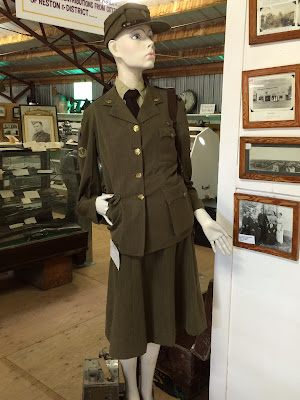
Dr. A.B. Chapman's black satchel and his medical instruments are on display in the museum.  Chapman was a long serving doctor in Reston from 1900 until his death in 1961.  His colleague, Dr. F. H. Clark's medical library is also part of the museum's collection. The former town bell, used to alert residents of fire or other emergencies as well as to alert children it was curfew time is housed here. Mounted animal heads and team sports uniforms each have a place as do pictures and items from the former Masonic Lodge. A handsome photo of WW2 casualty Gregor Birnie and the Canadian Women's Army Corps (CWAC) uniform of Bessie (Reid) Armstrong remind visitors of Reston and the district's contribution to the wars overseas.  


In 1973, the first summer students - Rhonda Russell and Melanie Heath began the annual tradition of youth input and it became the first job for many Restonites over the years including our son Scott. (Pictures and captions with italics are his work from the summer of 2013.) In 1977, a four month curator and historian was hired - David Braddell and much cataloging and research took place.  Besides that, the museum runs on community volunteers. 

This picture from the Reston Museum shows a group of men posing with 56 geese. A caption on the picture identifies the group as Left to Right – Colin C. Campbell, Andy Sutton, Dr. A.B. Chapman, Howard Jackson, Jack Ludy, and Frank Manning. This picture was donated to the museum in 1985 by Doris Robinson.


An annex was built across from the museum to the east and it houses the large agricultural equipment, vehicles and tools. A mezzanine on part of the structure contains many more interesting items donated by local families and businesses.  A mural depicting The Peanut was painted by local artist Whitney Paul-Joseph and brightens up the wall and shows the stops along the railway line from 1906 until 1961.

A third building was added in 1998 when the former home of Peanut conductor Angus McDonald and his family was moved into a location south of the museum. The house was built in 1896 for the R.J. Douglas family and was purchased in 1906 by Mr. McDonald at its former location just south and west of the railway.  Work is ongoing at McDonald house and there are hopes it can be transformed as a location to keep archives in a climate controlled environment.   

Volunteers have always been the life blood of the organization. Dennis Smith was responsible for tuning up the 1929 Ashley Brother's Plymouth and drove it in the Reston Fair Parade for many years. His wife Mabel was a niece of Joe and Charlie Ashley.  Their son Bert Smith continues as a long time board member.  In 1975, the Case steam engine was included in the parade with the work of Leonard and Ken Ludlam among others. Bert Stratford spent many hours making wooden frames to display the collection of pioneer photographs.

This photo from the Reston Museum shows the A.K. Cates curling team from 1922 after winning a trophy at the Souris Bonspiel. W.C. Bulloch was third, W. Mutter was second, and F.C. Guthrie was the lead for this team. Notice the wide brooms that they used then. The large trophy on the table is surrounded by individual prizes for the men. Perhaps they were candy dishes?

Over the years, strawberry socials were held as a fundraiser and a chance to showcase the museum and its items. This past year, the summer student workers set up an Instagram account here to share pictures and information on that social media channel. Great thinking to engage the next generation in keeping our museum interesting and relevant going forward! I hope you will make time to visit in July and August of 2022.  I have it on good authority that the Museum Board is always looking for members too! 😉 


 The caption under the picture says ”A Sample Catch 165 fish Reston July 17, 1913”. A few names are listed on the back of the picture. First in the back row on the left is William McDougall, 4th is Tom Mutter. Seventh person in the front row is Jack Ludy. This picture was donated to the museum in 1967 by Joe Ashley. The bottom right of the mat says “Boynton and Eaton, Reston, Man”. 


Tuesday, 11 January 2022

The Smell of Fresh Bread


Reston Recorder Clipping courtesy John and Verna Olenick

Fresh bread just out of the oven - what an unmistakable smell! Reston’s first bakery was in a small brick building between the grocery store and drugstore on Main Street in the early days of the town. With the population boom in 1906 due to a branch railway line being built to Wolseley, Munro moved the bakery to the Wilcox building, just south of the store as shown at the far left side in the clipping above. It would have been a busy spot with the bakery as well as an ice cream parlour, selling product made from local ingredients made in the basement. Barber services were also found in this building.  Joshua Kines Robertson was the head baker for many years until the unfortunate fire in 1934 when the building was destroyed and there was no local bakery for many years after that. Mr. Robertson then became the foreman in charge of the electric light plant and branched out into electrical repair as well.  He and his wife, the former Elizabeth "Lizzie" Bulloch, had two sons.  One of these, William Alan was killed in his role as an air gunner in 1942. 


The Western Canada Fire Underwriters Map above from 1928 indicates the Butcher and Bank on Fourth Street are made of brick by the pink colour. The Restaurant is yellow, showing a wood frame construction.  The building had been rebuilt after the 1916 fire by A.E. Smith just to the north of his brick Meat Market. This restaurant was the home of the Canada Cafe owned first by George and Jim Soon and later the Sing family. George immigrated from China in 1907, according to the census from 1921. The cafe closed in the early 1940’s and apparently sat empty until the Lamonds moved to town.

Pete Lamond worked for A.E. Smith for a time at the Reston Meat Market until he decided to open his own business - Pete's Meat Market in the former Canada Cafe building.  Baking made an appearance in the 1960’s when Bernice Lamond began selling in her home baking in the shop . They lived in the second floor over the shop and left in 1968. 

Photo dated 1964 from the McKee Archives at Brandon University

In July of 1968, Jack and Edith (Flannery) Russell opened Russell’s bakery and it was a real family affair with their 2 sons and 2 daughters taking active roles in the business over the years. Faithful blog reader and carpenter Brian, remembers helping put in a cement floor to accommodate a large bake oven with Francis Giles and removing the top storey. Son John Russell took over the business in 1978 and next to own it were Larry and Patricia Wright in 1985. In 1993, a partnership of the Williamson’s and the Davis’s were next until 1998 when Vera and Terry Abrams ran the bakery. Brent Reid was next from 1999 to 2004 along with his catering and landscaping businesses. Doughnuts from Brent’s were a popular treat along with other baked goods, bread and buns. It was a sad day when Reston Bakery closed on December 31, 2004 and was later torn down in to make way for Tycoles Insurance - Four Corner Associates now Andrews Agencies moving in their building on Main Street.

Vintage 1994 Main Street thanks to the Olenick collection

All is not lost however. Murray Anderson carries the baked goods of a few local bakeries as well as McGavins breads on the shelves of his  Reston Fine Foods.  Patti Cakes Gourmet Foods owners, Bob and Connie McQuiston have brought back the smell of fresh baking to the downtown streets during their seasonal business. 

Friday, 9 October 2020

Reston's Supreme Sacrifices - World War Two


The cenotaph stands proudly in Reston Memorial Park today as it has since 1922.  It was installed to honour the World War One deaths and ironically, some who viewed it back then would have their own names added a couple of decades later. The north side bears the names of the men from Reston who died in WWII.  I admit to quickly reading through them more than once and have heard them read out at Remembrance Day services  year after year.  It is easy to forget these were real Restonites with families whose lives were never the same after they didn't come home. 

I happened upon some excellent research done by the late Les Allison from Roland, MB that may have been done for his book several decades ago and it was the main resource for this blog post.  My summer project to index and photograph the gravestones in Reston Cemetery for Find a Grave helped me recognize some of the names although there is no one left in the area with that surname. 

 Each name has a link to his memorial online (hover your mouse and click) and also his parents for the ones I could find. The pictures of soldiers on the memorial are a poignant reminder of how young these men were.  Each one's final resting or commemoration place overseas is also linked with location and pictures of the spot. So many lost young lives. 
 
H103477 Fort Garry Tank Regiment
Killed August 8, 1944 and buried in Bretteville-Sur-Laize Canadian War Cemetery, France
age 29

(Observer Navigator) R91867 #418 Boston Squadron
Crashed south of the airdrome of St. Stamford, England on April 1, 1942. Another Canadian and Brit were also killed and buried at Walden Cemetery, Saffron, Essex.
Age 21

(Wireless Air Gunner) R86420
Killed on August 28, 1942 at #14 operation training unit at Cottesmore flying in a Hampden aircraft.
All 4 Canadian crew were lost and buried at Cottesmore Cemetery, Ruland, England.
Age 21

*Flight Sergeant Earl Kitchener Bulloch
(Bomb aimer) R162155 #467 Aussie Lancaster Squadron
Killed on September 12, 1944 near their target of Stuttgart, Germany. He was the only Canadian with six Aussies. All buried at Durnbach War Cemetery.
age 28

*Flight Sergeant Andrew Glenn Caldwell
(Air Gunner) R281867 #429 Lancaster Squadron
He was lost on March 6, 1945 when returning from a raid on Chemnitz, Germany. They crashed at Halling, Kent England. They had flak damage over the target and all seven Canadian crew were killed. All were buried at Brookwood Military Cemetery, Woking, England.
Age 20

*Flight Sergeant Arthur Kingsley Farnie
(Observer Navigator) R86310.
All four Canadian crew were lost flying in a Hampden aircraft of #415Squadron over Germany on July 2, 1942
Burial was in Sage War Cemetery, Oldenburg, Germany
Age 20
lived with his aunt and uncle Bella (Farnie) and George Harper in Reston

*Sergeant John Foreman
(Wireless Air Gunner) R80334
He was lost on October 6, 1942 flying with #75 New Zealand Wellington squadron with five New Zealanders over Holland. 
Age 21

*Squadron Leader Archibald John Guthrie
(Pilot) 34155, Royal Air Force
He led his squadron of Wellington bombers of #9 squadron to the island of Heligoland off Germany in daylight on December 18, 1939. The cloud cleared and nearly half of the three squadrons involved were shot down by enemy fighters. Several other Canadians were also lost. 
His name is listed on the Runnymede Memorial with no known grave.
Age 28.

H60745 Royal Canadian Artillery
Killed on September 9, 1944 
Buried at Adegem Canadian War Cemetery, Belgium. 
Age 22

20512 Queen’s Own Cameron Highlanders
Killed at Dieppe taken prisoner - August 19, 1942
Buried at Saint Sever Cemetery, Rouen France
Age 23
Parents William and Eva Victoria (Greenlay) Horner

*Sergeant William Mennie
K112, British Columbia Dragoons
Killed on June 1, 1945
Buried at Holton Canadian War Cemetery, Holland
age 29
parents William and Jane Mennie

*Lieutenant Alexander McKay
Saskatoon Light Infantry
Killed on September 20, 1944 in Italy 
Buried at Coriano Ridge War Cemetery in Italy
Age 35

*Flight Sergeant Kenneth Cameron McMurchy
(Air Gunner) R253156 #424 Lancaster Squadron
Was lost on February 15, 1945 with a Canadian crew on mine laying operation to the Pomeranian area of Germany.
His name is inscribed on Runnymede Memorial with no known grave.
Age 21
parents John (Jack) and Eleanor Mary (Elliott) McMurchy.

H 22815 Royal Winnipeg Rifles
Killed on April 21, 1945 
age 19

*Flight officer Robert Franklin Ready
(Bomb Aimer) J22628, #20 O.T.U.
Was in a Wellington bomber which crashed in the Bristol Channel 1 mile west of Flat Holme Island on June 29, 1943 on an air sea flying exercise at low-level when one wing hit the water. 
Burial was at Weston Super Mare Cemetery, Somerset, England.
Age 22

*Flight Sergeant William Alan Robertson
(Wireless Air Gunner) R59266
Was flying in a Wellington bomber in #405 squadron on June 5, 1942 when it force landed and crashed near Strensall Military Camp in Yorkshire. Three other Canadians were also killed.
All are buried in St. Catherine Churchyard, Barmley on the Moor, Yorkshire, England
Age 28

*Flight officer Edwin Earl Smith
(Pilot) J12568, #159 Liberator Squadron
Was lost on August 12, 1943 with one other Canadian and the R.A.F. crew
All are buried at the war cemetery in Ranchi, India
Age 28

We Will Remember Them

My next project will be doing the same research for the WW1 Reston soldiers.  Any information about either group would be very welcome at ssimms@escape.ca